Kirkpatrick Model for Trainers: Start Evaluation Earlier
14 May 2026
A practical guide for trainers and facilitators to use the Kirkpatrick Model to think beyond satisfaction forms and design for behavior and results.
Many training evaluations begin with the wrong question.
"Did participants like it?"
That question is not useless.
But it is incomplete.
A session can be enjoyable and still not change behavior.
A trainer can receive high ratings and still leave the organization with the same problem.
The Kirkpatrick Model helps trainers look beyond applause.
It gives a simple structure for evaluating training across four levels: Reaction, Learning, Behavior, and Results.
This is not about killing joy in the room.
Enjoyment matters.
But if the only evidence is "they liked it," we are stopping too early.
What the Kirkpatrick Model is
Kirkpatrick Partners describes the model as a framework for identifying the impact a program or initiative has on an organization.
The model breaks evaluation into four levels:
- Reaction
- Learning
- Behavior
- Results
Kirkpatrick Partners also emphasizes that modern use of the model should start with desired results and work backward, rather than treating evaluation as a checklist at the end.
For trainers, that is the important shift.
Evaluation should begin during design.
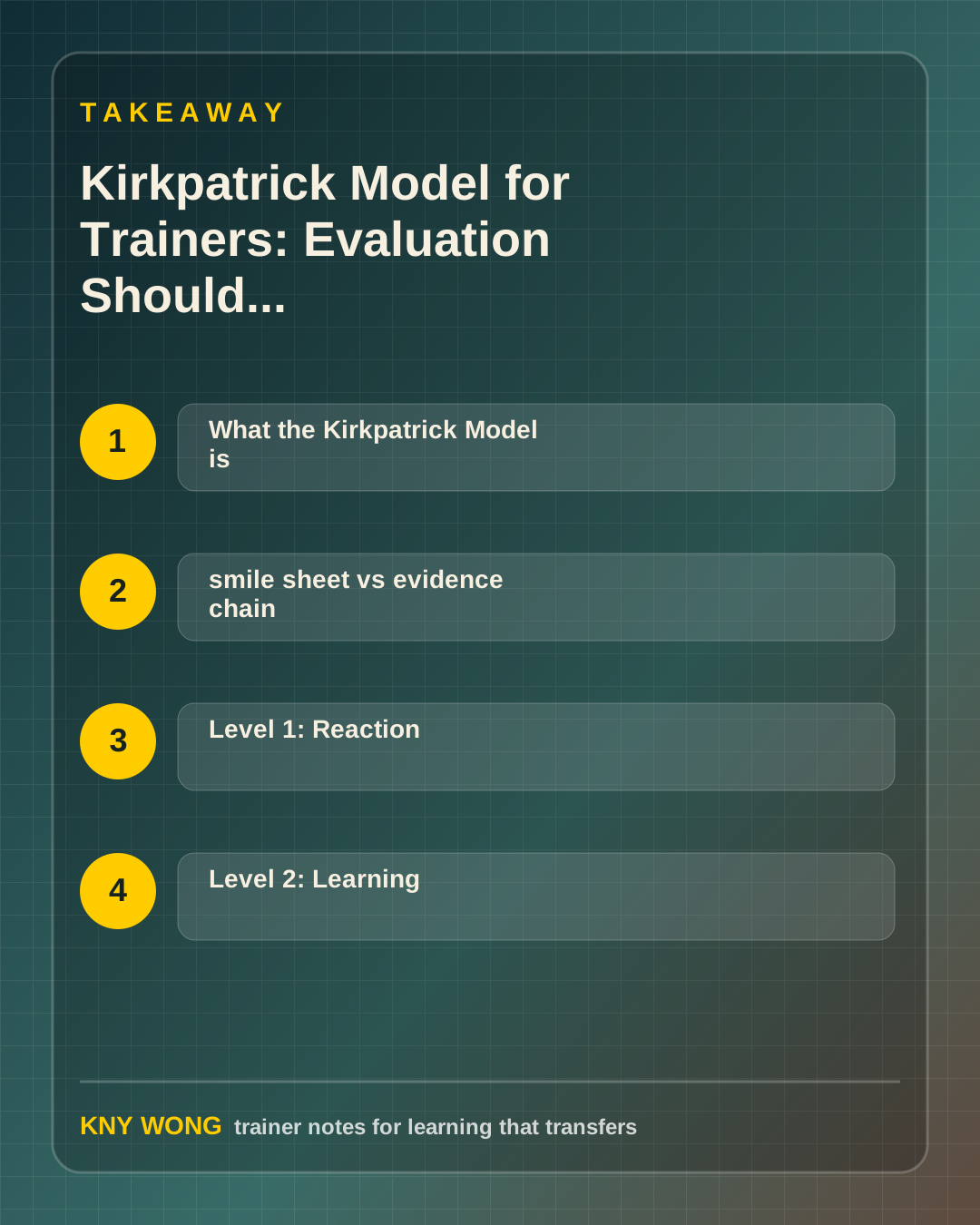
The simple distinction: smile sheet vs evidence chain
A smile sheet asks:
"Did they like the training?"
An evidence chain asks:
"Did they learn, apply, and contribute to the intended result?"
That is a much stronger question.
It does not mean every workshop must prove business impact with perfect data.
It means trainers should be honest about what they are measuring.
Level 1: Reaction
Reaction measures how participants respond to the learning experience.
Ask:
- Was it relevant?
- Was it engaging?
- Was the pace appropriate?
- Did learners see value?
But do not stop here.
Positive reaction supports learning, but it is not the same as learning.
Level 2: Learning
Learning measures whether participants acquired intended knowledge, skills, attitudes, confidence, or commitment.
For trainers, this could be assessed through:
- practice tasks
- demonstrations
- short quizzes
- scenario responses
- before/after confidence checks
If the session promises skill, learners should show the skill.
Level 3: Behavior
Behavior asks whether learners apply what they learned back at work.
This is where many programs become weak.
The workshop ends, the learner returns to work, and old habits return.
Level 3 requires follow-up:
- manager observation
- participant reflection
- work sample review
- peer feedback
- system or workflow evidence
Behavior change needs support after training.
Level 4: Results
Results asks whether targeted outcomes occurred.
Depending on the program, this may relate to quality, speed, customer experience, safety, sales, adoption, or other organizational indicators.
Be careful here.
Do not claim training caused a result unless the evidence supports it.
A trainer can contribute to results without pretending training is the only factor.
Common mistakes to avoid
The first mistake is measuring only reaction.
The second mistake is promising Level 4 results without access to Level 4 data.
The third mistake is waiting until the end to design evaluation.
The fourth mistake is ignoring the manager.
If the workplace does not support application, behavior change becomes difficult.
A 15-minute action step
Before your next workshop, write one sentence for each level:
- Reaction: Participants should feel...
- Learning: Participants should be able to...
- Behavior: Participants should apply...
- Results: The organization hopes to improve...
Then ask:
- "What evidence can we reasonably collect for each?"
Final takeaway
It is part of the design.
When trainers think about evidence early, they design sessions that are easier to defend, improve, and transfer.
Sources referenced:
- Kirkpatrick Partners: The Kirkpatrick Model
- Kirkpatrick Partners: methodology overview
- MedEd Mentor: four levels summary
- ATD press release on four-level evaluation
Related reading:
If you want this adapted for your trainers, teams, or facilitation workflow, contact Kny.